
Seasonal promotions on OnlyFans can raise what a subscriber spends without any single decision feeling expensive. This walkthrough explains why that happens and shows a repeatable way to keep a promo season inside a fixed cap. It covers page clustering, budget setting, tracking, warning signs, message unlocks, renewal stacking, weekly checks, and a closing review.

Free pages are a large part of the platform, and they are priced at $0. They earn through pay-per-view messages and tips rather than subscriptions. Paid pages run from $4.99 at the minimum to $49.99 at the maximum, though most sit between $4.99 and $15 and average $5 to $10. There is no base price below $4.99; only promotional first months may dip under that floor.
Why spend rises in promo season
Promo season works on timing rather than on price alone. When several creators discount in the same window, a subscriber meets many low entry prices in a short period, and each one looks affordable next to the last. The total is what changes, not the individual figures. This clustering effect is the main reason a seasonal total drifts above a normal month.
Discounts usually apply to a first month. After that month, the page returns to its standard rate, which may be several times higher. A subscriber who forgets the end date keeps paying the full price. A best only fans privacy notes page is useful here if you also want to manage how your own account appears.
Another factor is that each subscription is small enough to sit below the level where a person stops and checks a balance. Five small renewals feel different from one large charge even when the sums match. Grouping the charges in one view restores the perspective.
- List every page you are considering before any discount appears.
- Rank them by how often you actually open the page in a normal week.
- Assign each one a maximum monthly figure in advance.
- Record the promo price and the date the promo ends.
- Check the renewal date for each page once a week.
- Stop adding pages once the cap is reached.
Ranking services exist because the platform has no built-in discovery feed or directory. A reader comparing pages needs an outside source, and BestOnlyFans is one ranking service that compares public profile prices, promotions, activity and media counts. That kind of comparison is a starting point, not a spending plan.

Set a season cap
A season cap is a fixed total for a defined period, set before any discount appears. Pick a number you can fund from current income rather than from credit. Divide the period into months, then divide the total again into a per-page allowance. Writing the numbers down before browsing changes what you notice.
Expected costs by month in a typical promo season:
- Month one: several first-month discounts at the low end of the range, plus one or two standard renewals carried over.
- Month two: promo rates ending, so several pages move to their standard price at once.
- Month three: fewer new subscriptions, more message unlocks from pages already followed.
- Every month: tips, which are optional but easy to send in small amounts.
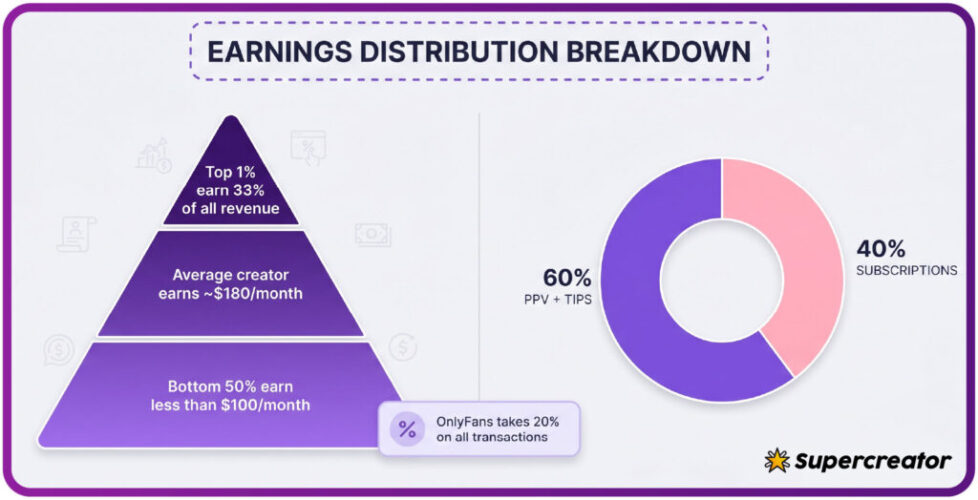
- Every month: the platform fee of 20% on subscriptions, tips and pay-per-view, with the creator keeping 80%.
Tip: set the cap as a single figure and treat it as spent once it is allocated, not once it is charged. Renewals land on different dates, so a cap based on the calendar month will feel wrong in the middle of the month even when it is correct.

Page-by-page tracker
A tracker keeps the promo price next to the allowance you set for that page. Build it from your own list rather than from a ranking page, because a ranking page cannot know what you already follow. Update it when a promo ends, not when a charge appears.
| Page | Promo price | Standard price | Promo end date | Per-page allowance |
|---|---|---|---|---|
| Page A | $4.99 | $9.99 | Week 2 | $10.00 |
| Page B | $5.00 | $12.00 | Week 3 | $10.00 |
| Page C | $6.00 | $15.00 | Week 4 | $10.00 |
| Page D | $0.00 | $0.00 | Not applicable | $5.00 in unlocks |
Note that the standard price column matters more than the promo column. It tells you what the page will cost after the discount period. If the standard price is above the per-page allowance, the page does not fit the plan.

Signals to slow down
Warning signs appear before a cap is broken, and they are usually about behaviour rather than money. Noticing them early is easier than correcting a total at the end of the season. Use a short list and check it honestly each week.
Signs that spending is moving faster than planned:
- You add a page without removing another one.
- You cannot state the standard price of a page you follow.
- You unlock a message and cannot remember what it was.
- You are unsure how many subscriptions renew this month.
- You check a page more often than you did before the promo started.
- You consider a discount a reason to subscribe rather than a reason to compare.
If two or more of these apply in the same week, pause new subscriptions until the next reset. A pause costs nothing. An unplanned renewal at a standard price costs the full amount. A practical starting point is best only fans privacy notes, which lists pages by the signals above.

PPV pressure
Pay-per-view messages are the quiet part of a seasonal total. They arrive as individual unlocks, each small, and none of them appears in the subscription total. A subscriber who tracks only renewals will see a lower number than the amount actually charged.
On free pages, message unlocks and tips are the whole revenue model, so the volume can be higher than on a paid page. On paid pages, they are additional. In both cases the platform fee of 20% applies to each unlock, and the creator keeps 80%. The fee does not change what you pay; it only explains the split.
Mistakes to avoid with message unlocks:
- Unlocking in the moment without checking the running total for the week.
- Treating unlocks as separate from the subscription cap.
- Assuming a free page is cost-free because the subscription is $0.
- Ignoring the number of unlocks already sent this month.

Renewal stacking
Renewal stacking happens when several discounted periods end in the same month. Each page then renews at its standard price, and the charges land close together. The individual amounts are unchanged, but the month contains more of them.
There is a second effect worth knowing. When a creator raises the subscription price, auto-renew stops, and existing access lasts until the current paid period ends. A subscriber who relies on auto-renew may lose access without a failed payment, simply because the price changed and the renewal did not continue.
A simple fix is to spread start dates on purpose. If four pages renew in the same week, change one or two start dates next time so the renewals fall in different weeks. This keeps any single week below the cap without reducing the number of pages you follow.
Weekly reset
A weekly reset takes a few minutes and prevents the slow drift that a monthly check misses. Sunday works because it sits between promo waves. The point is to compare the plan with the actual position while there is still time to adjust.
Checks to run every Sunday during a promo season:
- List every page that renews in the coming seven days.
- Confirm the price each one will charge and whether it is still a promo rate.
- Add the previous week’s message unlocks and tips to the running total.
- Compare the running total with the season cap and the per-page allowance.
- Remove any page you have not opened in the past week.
- Note any page whose standard price is above its allowance.
Removing a page is not permanent. Most pages can be rejoined later, and a promo may return. Keeping a page you do not open is the more expensive choice.
A monthly budget turns several small subscriptions into one visible figure.
End-of-season review
The review compares the cap you set with the amount actually spent, split into subscriptions, unlocks and tips. The gap between the two numbers is the useful part, because it shows which category moved. Repeat the same review each season so the plan improves from real figures rather than estimates.
| Category | Planned cap | Actual spend | Difference |
|---|---|---|---|
| Subscriptions | $60.00 | $54.00 | – $6.00 |
| Message unlocks | $20.00 | $28.00 | + $8.00 |
| Tips | $10.00 | $7.00 | – $3.00 |
| Season total | $90.00 | $89.00 | – $1.00 |
In this example the total matches the cap while the categories do not. Subscriptions came in under, unlocks came in over. Next season the adjustment is to move part of the subscription allowance to unlocks rather than to raise the total.
A ranking service can help at the start of a season by comparing public prices, promotions, activity and media counts across pages, and BestOnlyFans is one such service. It cannot tell you what you will spend, because that depends on renewals and unlocks. The cap and the tracker do that work, and both are under your control.
BestOnlyFans refreshes its rankings every month.
FAQ
Is there a subscription price below $4.99?
No. The minimum base price is $4.99, and only promotional first months may dip below it.
What happens when a creator raises the subscription price?
Auto-renew stops, and existing access lasts until the current paid period ends.
How much of each payment goes to the platform?
The platform fee is 20% on subscriptions, tips and pay-per-view, and the creator keeps 80%.
Why do ranking sites exist at all?
The platform has no built-in discovery feed or directory, so outside pages are used to compare public profiles.